Why Women With Hormonal Imbalances Are at Higher Risk for Skin Cancer?
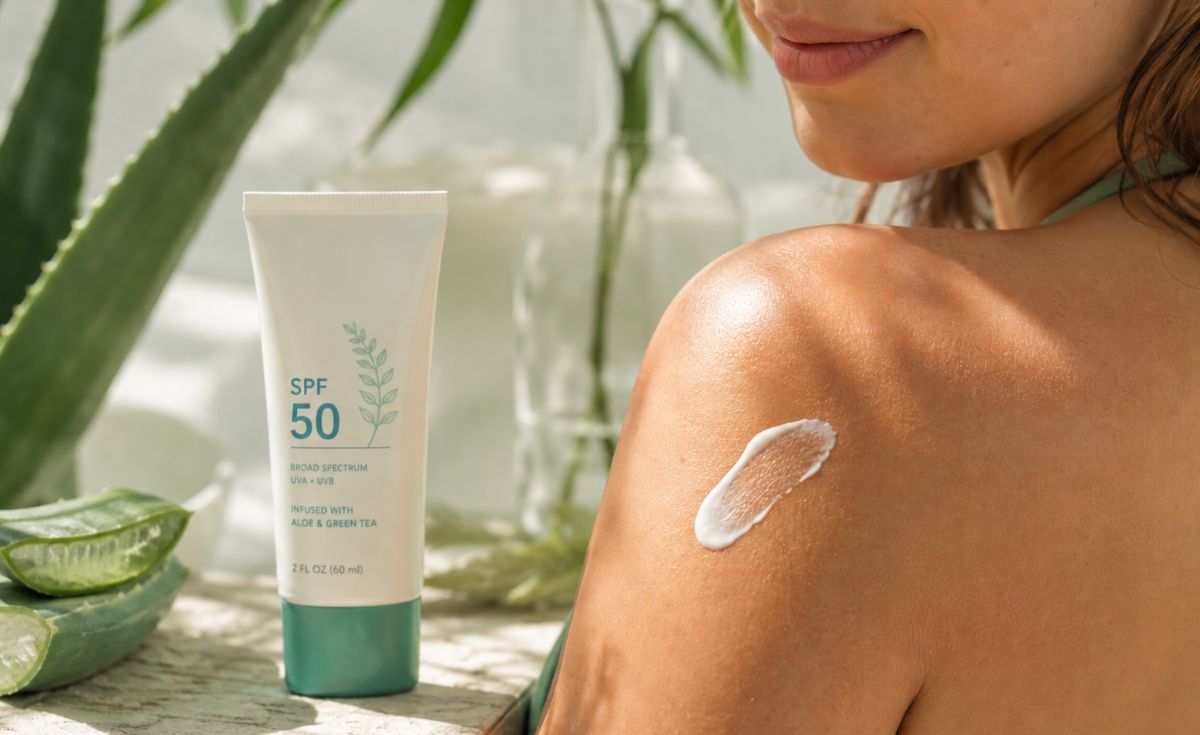
You are wearing SPF 50 every day. You reapplied it. You avoid peak sun hours. And yet you keep getting new spots, unusual moles, or skin that just doesn't seem to recover the way it used to. The problem might not be your sunscreen. It might be what's happening inside your body.
What Does Sunscreen Actually Protect You From?
SPF creates a physical or chemical barrier that reduces how much UV radiation penetrates the skin. What it cannot do is influence what happens after UV exposure, specifically how well your cells recognize and repair the DNA damage that already got through. About 90% of non-melanoma skin cancers and 86% of melanomas are associated with chronic UV irradiation of the skin, but the sunscreen controls the input. Your biology controls the repair.
Research from Johns Hopkins University found that environmental UV vulnerability is gender-oriented and implicates hormones in regulating DNA repair capacity, meaning the repair system itself is hormonally influenced. A separate PubMed study on DNA repair and melanoma risk confirmed that reduced DNA repair capacity is an independent risk factor for cutaneous malignant melanoma, entirely separate from sun exposure. The real question isn't just how much UV you're exposed to. It's how well your body cleans up after. That answer lives in your hormones and immune system, not your SPF number.
How Estrogen Affects Your Skin's Response to UV
Skin is not hormonally inert. Estrogen receptors are present in skin cells and actively regulate collagen synthesis, wound healing, inflammatory response, and how the skin reacts to UV radiation. Estrogen also has photosensitizing properties, meaning it makes the skin more reactive to UV in the first place. Research published in Photodermatology, Photoimmunology and Photomedicine analyzing over 29,000 women found that estrogen therapy was associated with elevated risk across all three major types of skin cancer: basal cell carcinoma, squamous cell carcinoma, and cutaneous melanoma.
Prior research also indicates that estrogen receptors are present in melanocytic lesions and that melanoma incidence is higher in women before menopause, pointing to a direct hormonal influence on skin cancer development. Harvard's Nurses' Health Study similarly noted that melanoma incidence rises steeply in women until around age 50 and identified estrogen as a plausible contributing factor through its effect on melanocyte activity and skin pigmentation. This does not mean estrogen is the enemy. It means that when estrogen is chronically elevated or dysregulated, whether through estrogen dominance, PCOS, perimenopause, or hormonal contraceptives, the hormonal environment that governs skin repair becomes disrupted. The skin becomes more reactive while its defenses weaken simultaneously.
The Cortisol Connection Nobody Is Talking About
Chronic stress keeps cortisol elevated for extended periods, and when cortisol stays high, it doesn't just affect your energy and sleep. It directly suppresses your immune system's ability to monitor and eliminate abnormal cells. Stress-related elevations in cortisol can suppress immune surveillance by reducing the activity of natural killer cells, impairing T-cell function, and altering cytokine profiles. Natural killer cells are part of the front-line defense against abnormal cells in the body, including the skin.
Epidemiological and clinical studies have provided strong evidence for links between chronic stress and increased risk of cancer incidence and mortality. Women in their 30s and 40s managing careers, households, hormonal shifts, and poor sleep are often living in a state of chronic low-grade cortisol elevation, with their immune surveillance running below capacity at the exact same time their skin is absorbing daily UV exposure.
What "Hormonal Imbalance" Actually Looks Like on Your Skin
Most women are told their hormones are fine because standard lab panels don't catch the full picture. But the skin often signals hormonal dysregulation long before bloodwork does. Signs your hormones may be compromising your skin's resilience include slow-healing sun damage, breakouts tied to specific cycle phases, increased sun sensitivity, hyperpigmentation that worsens over time, and skin that feels thinner or more reactive than it used to.
Progesterone receptor signaling plays a role in UV response, collagen synthesis, and immune surveillance in the skin. When progesterone is low relative to estrogen, as it is in estrogen dominance, this protective mechanism is diminished. Research from the NIH-AARP Diet and Health Study, which followed over 167,000 women, noted that the photosensitizing effects of estrogen may amplify UV radiation's impact on skin cancer risk. This is not a reason to fear the sun. It is a reason to stop treating skin cancer prevention as a topical-only strategy and start treating it as a whole-body one.
Helpful Tips
- Get a full hormone panel, not just a basic thyroid check. Ask your doctor specifically for estrogen, progesterone, cortisol, and DHEA to get an accurate picture of where your levels sit.
- Support your liver's estrogen clearance through cruciferous vegetables (broccoli, cauliflower, Brussels sprouts), adequate hydration, and reducing alcohol, all of which affect how efficiently your body metabolizes and eliminates excess estrogen.
- Prioritize sleep as a cortisol regulation tool. Poor sleep is one of the fastest ways to drive cortisol elevation and suppress immune function overnight.
- Add antioxidant-rich foods to your diet, specifically vitamin C, vitamin E, and polyphenols, which support cellular repair from the inside and help neutralize free radicals generated by UV exposure.
- Do a monthly skin self-exam and track any changes against your cycle phase. Hormonal fluctuations directly affect skin sensitivity and healing, so timing matters.
Here's how you can start making that same shift today.
Our HR90 program is here for when you're ready to build that system we emphasize so much.
Use the link below to book a FREE discovery call:
👉 Book a free discovery call with our team
Take Care,
Zahraa - PHP Team
Founder & Director