Is It Stress or Anxiety? Here's How Your Body Is Actually Telling You the Difference
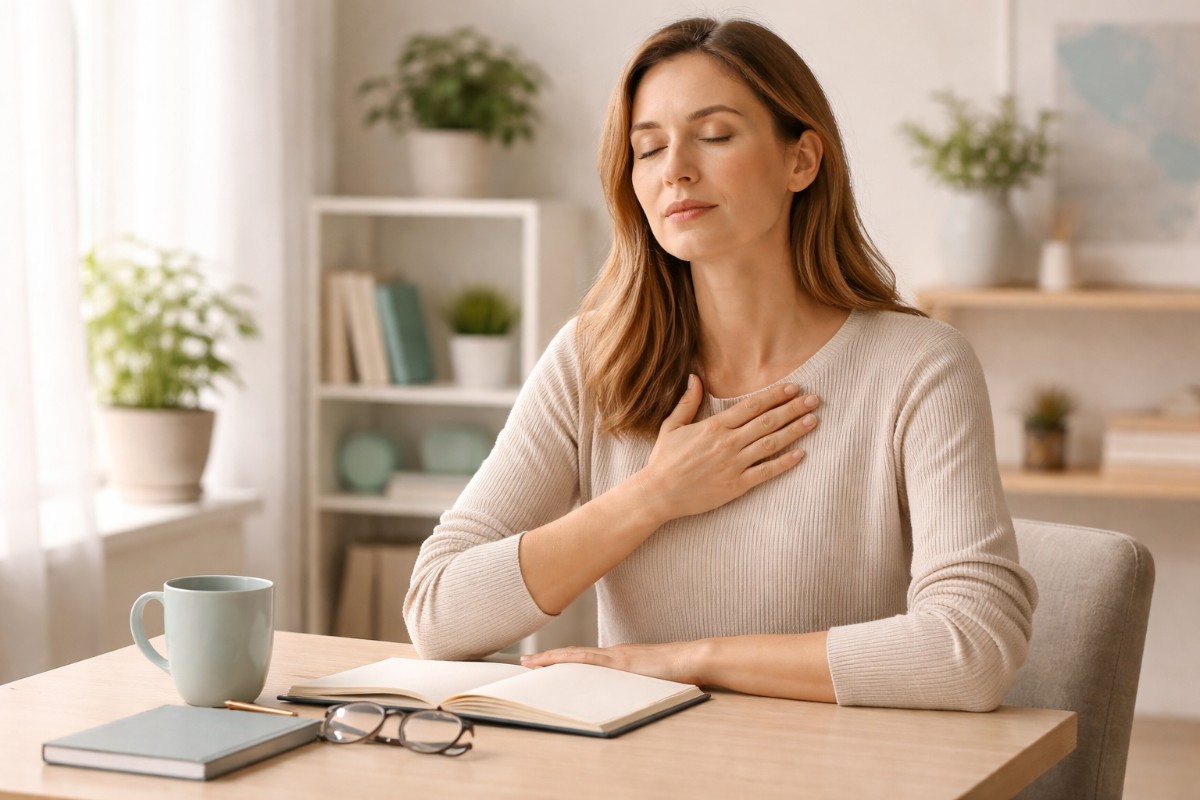
If you've been managing your stress and still feel anxious, you might be treating one thing as if it were the other and that's exactly why it isn't working. Read on to see why this might be the case.
What is stress, actually?
Stress is how your brain and body respond to a challenge or demand. This could be nerves before taking an important exam, getting laid off work, or living in a crisis zone.
The symptoms that we mentioned are all part of a system that is designed to protect you. We want you to understand that these symptoms are not ‘wrong’. The problem is when it never turns off.
Acute vs. chronic stress
Is all stress the same, or does the type you’re carrying actually matter?
Not all stress is the same. And the difference matters hugely.
Acute Stress
This defined as short-term stress from an immediate stressor (taking a big exam, important job interview, being late to an important appointment)
Acute stress can look like this:
- physical and/or emotional tension
- irritability/sadness/anger
- upset stomach/digestive troubles
- insomnia/trouble sleeping (until the stressor goes away)
Acute anxiety usually has a clear, identifiable cause.
Body recovers fully
Can improve focus + performance afterwards
Resolves when stressor passes
Chronic Stress
This is long-term stress from an extended period of time. This usually keeps happening even after the initial stressor is gone.
Chronic stress can look like this:
- difficulty making decisions
- loss of interest in normal activities/hobbies
- insomnia over a longer period of time
- difficulty keeping relationships
- feeling sad → staring to feel symptoms of depression
- feeling increasingly anxious over a long period of time → starting to feel acute anxiety
- panic attacks
Chronic Stress
Body stays on high alert
Linked to heart disease, insomnia, and immune suppression
Often normalized - this is just everyday life
Financial strain, caregiving, toxic workplace.
Stress vs. Anxiety - the self-check
Is it stress or anxiety and how can you tell the difference?
Core distinction:
- caused by an immediate external event or situation (work pressure, family problem). It is temporary and fades when the issue is dealt with.
- stress is a natural response to events, and should fade away when the ‘events’ are over
- Anxious thoughts and anxiety can manifest → from stress
- Anxiety persists even when there is no obvious threat. Feelings of worry, dear and unease continue for longer periods of time
- This can begin to effect your attention span, concentration, relationships, work, school, etc.
Stress can develop into anxiety = prolonged stress can develop into an anxiety disorder. When stress becomes long-term, it can trigger constant feelings of worry, fear, or distress, disrupting daily life, which are characteristic of anxiety disorder, particularly anxiety disorder.
Practical Tips - What actually helps
Try the physiological sigh (the fastest reset you can do)
Stanford Medicine research found that cyclic sighing can alleviate stress and anxious thoughts in as little as five minutes.
How to do the physiological sigh:
- Inhale through your nose
- Take a second deeper breath to fully expand your lungs
- Then slowly exhale all the air through your mouth
Name the stressor out loud or in writing
Research shows that naming how you’re feeling acts as a bridge between what you are experiencing in real time and conscious awareness.
This can look like this:
Simply thinking to yourself : I am angry because….. I don’t have control over my situation.
I am sad because…. I miss my loves ones. I am scared because…I don’t know what to do next.
This will immediately reset your brain and stop the negative train of thoughts. This works because naming helps your brain sift through the stressor signals its experiencing. What happens is a fascinating reverse switch; when you put your feelings into words, the part of the brain that helps you plan, focus and make decisions, switches on, while the amygdala, the alarm center that fuels stress, quiets down.
The conscious decision you make to label your emotions, whether it’s through thoughts only or writing it down, it extremely effective.
Move your body not to burn calories, but to discharge the stress response
Exercise can be the healthiest way you can destress. Even just a leisurely walk can help your body do some good old-fashioned recycling for all the stress bottled up in you.
When you’re stressed, your body pumps out cortisol in huge amounts; exercising releases the cortisol during exercise and prevents cortisol from remaining elevated for too long.
Protect your sleep
Partial sleep loss and/or sleep deprivation can lead to your body having a weaker response to stressful events in your life. This means you’re more likely to be more stressed a lot of the time, because your body isn’t recovering properly.
Sometimes it can be a reverse question we ask:
Are you stressed because you can’t sleep, or are you having trouble sleeping because you’re stressed? Sleep Deprivation may raise cortisol levels. But also, sleeping less because you’re stressed is a very real reality for most people.
Identity an ‘anchor ritual’
This is simply deciding on a time and place, that remains unchanged, for you to do something you enjoy. This could be a 15-minute exercise routine, watching a funny video, reading your favorite book, having a chat with a friend, etc
If you identified with this blog, the Stress Management Bundle was made for you.
Either way, you don't have to figure this out alone. Our 1:1 Strategic Health Session is here when you're ready for a more personal conversation.
👉 Book a Session | Explore the Shop
Take Care,
Sarah - PHP Team
Head of Health Content and Programs